A Beginner’s Guide to Different Types of Nightwear for Women
Most of us don't choose our sleepwear. We inherit it. The tee from a 2019 charity run. The pajama pants someone gave us three Christmases ago. The leggings that got demoted from the gym.
Which is strange, because you'll spend roughly a third of your life in it.
If you've never actually thought about the different types of nightwear for women — what each style is for, and which one suits how you sleep — this guide walks through it. Not as a catalog of every garment that exists, but as a decision: what should you actually be wearing to bed?
Fair warning on where we're coming from. We make 100% woven cotton pajama pants in small batches, so cotton is what we know best. We'll tell you where it wins, and we'll tell you honestly where it doesn't.
Start with how you sleep, not what looks nice
Before fabric or style, answer three questions. They narrow the field faster than anything else:
- Do you run hot or cold at night? This decides your fabric before anything else does.
- Is it sleepwear only, or does it need to survive the school pickup and a delivery driver? Very different requirements.
- What's failed you before? Riding-up waistbands, short hems, itchy seams, no pockets. Whatever annoyed you last time is the thing to solve first.
Hold your answers. Everything below maps back to them.
The four types of nightwear worth knowing
Most sleepwear falls into four buckets. Here's the honest comparison:
| Pajama Pants | Pajama Shorts | Nightgown / Sleep Shirt | Lounge Sets | |
|---|---|---|---|---|
| Best for | Year-round, most sleepers | Hot sleepers, summer | Minimal-contact sleepers | Sleep + daytime |
| Hot nights | Good in cotton | Best | Best | Depends on fabric |
| Cold nights | Best | Poor | Poor | Good |
| Pockets | Usually | Sometimes | Rarely | Sometimes |
| Answer the door in it? | Yes | Not usually | No | Yes |
| Tall & plus options | Widely available | Limited | Limited | Limited |
| Weak point | Can overheat if synthetic | No leg coverage | Rides up in your sleep | Often overpriced |
Pajama pants
The default, and for good reason: they work in almost every season, cover you enough to be seen in, and come in the widest size range of any category.
The details that decide whether you love or hate a pair:
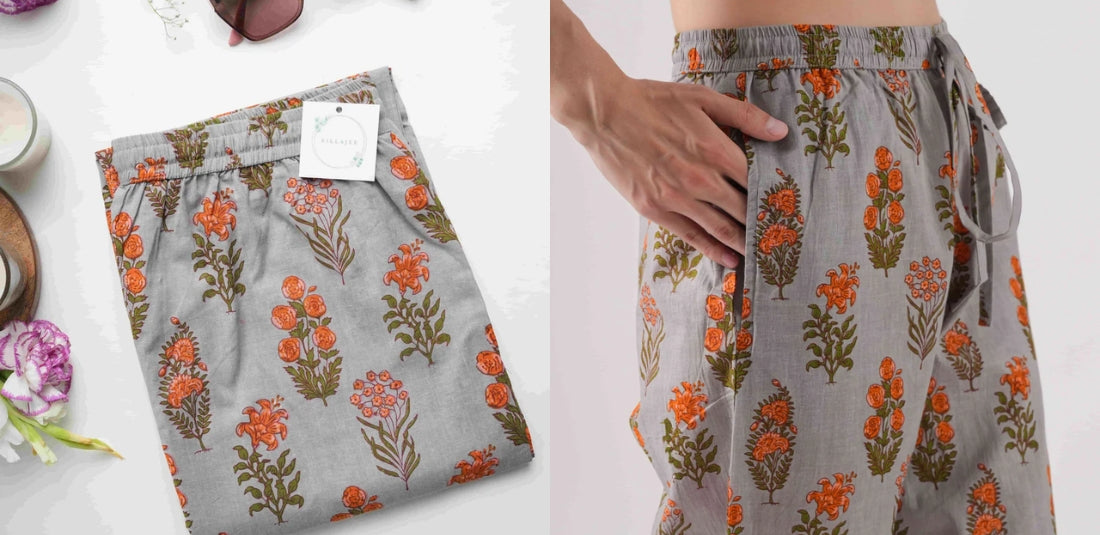
- The waistband. Elastic alone digs in. Drawstring alone slips. Elastic plus an adjustable drawstring lets you set the tension yourself — which matters enormously if your size fluctuates, if you're postpartum, or if you just don't want a waistband ring on your stomach at 3am.
- Pockets, and whether they're real. A pocket that fits a phone is a different garment from a pocket that fits a chapstick. Ours are deep side pockets, because the whole point is not having to get up.
- The fabric. Covered below, but this is the one people get wrong most.
Pajama shorts
For hot sleepers and humid nights, cotton pajama shorts beat everything else. Less fabric, more airflow, nothing bunching behind your knees.
The catch is that they're a genuinely seasonal purchase, and they don't work if you sleep in a cold room or want to be seen in them. Most people who own shorts also own pants. They're a complement, not a replacement.
Nightgowns and sleep shirts
If you hate the feeling of fabric between your legs and plenty of people do nothing else will satisfy you. One piece, nothing constricting, done.
The trade-off is real, though: nightgowns ride up as you move. If you're a restless sleeper, you'll wake up wearing it around your waist. And they're the least practical option the moment you leave the bedroom.
We don't make nightgowns. If that's your style, buy one from someone who does it well.
Lounge sets and poplin pants
The category that's grown fastest, because the line between "at home" and "at work" dissolved and never came back.
Cotton poplin lounge pants sit in an interesting middle. Poplin is a plain-weave cotton with a crisper hand and a smoother finish than jersey it holds a shape rather than clinging to one. So it reads as trousers on a video call and as pajamas at midnight. If you want one pair of pants to do both jobs, this is the weave to look for.
Fabric: the part that actually matters
You can get every other decision right and still sleep badly if the fabric is wrong.
Cotton breathes. Air moves through the weave, and it absorbs moisture instead of trapping it against you. That's why it's the default for hot sleepers, humid climates, and anyone dealing with night sweats. The trade-off, told straight: cotton is absorbent rather than wicking. If you sweat heavily, cotton holds the moisture rather than pushing it away brilliant for most people, less ideal for a small minority.
Look for the weave, not just the word. Woven cotton poplin, voile, lawn breathes better than knit cotton jersey, which is what most cheap pajamas are. It's also what our founder, Anandita, grew up wearing in India, and the reason she started the brand: she couldn't find woven cotton sleepwear in the U.S. that felt like what she remembered.
Silk feels extraordinary and regulates temperature genuinely well. It's also expensive and needs careful washing. Worth it if you'll actually maintain it.
Satin is a weave, not a fiber usually polyester. It has silk's sheen at a fraction of the price and none of the breathability. Fine if you like the feel; bad for hot sleepers.
Modal and bamboo are soft, drapey and moisture-wicking. Both are semi-synthetic — chemically processed wood pulp, not the natural fibers the marketing implies. Genuinely good fabrics; just know what you're buying.
Flannel and fleece are for cold rooms and winter. Flannel is brushed cotton, so it still breathes. Fleece is polyester and doesn't it'll cook you if you run warm.
Polyester is what most budget sleepwear is, whatever the product photo suggests. It's cheap, doesn't breathe, and is why so many people wake up damp. Read the label.
The fit problem nobody solves
Here's where most sleepwear brands quietly give up.
If you're tall, standard pajama pants end somewhere around your ankle and stay there. Brands design to a 5'4" block and grade the waist without touching the inseam. You get a wider pant that's still too short. Tall-fit pajama pants are cut with a longer inseam from the start that's a different pattern, not a bigger size.
If you're plus size, the frustration is usually fabric, not fit. The bulk of extended-size sleepwear is polyester, and polyester plus a warm sleeper is a bad night. Plus size cotton pajama pants are the harder thing to find and the thing worth holding out for.
Whatever you're buying and from whom: check the actual inseam and the actual size chart before you order. Not the S/M/L label the measurements. Our size guide lists them, and any brand worth buying from will publish theirs too.
Buying nightwear online without regretting it
- Measure once, then shop by numbers. Waist, hip, and inseam. Sizes are meaningless across brands.
-
Read the composition, not the adjectives. "Silky," "buttery," and "luxe" mean nothing.
100% cottonmeans something. - Search reviews for "sizing" and "shrink." That's where the truth is.
- Check the return policy before you check out. Fit is genuinely hard to predict online. A brand confident in its product makes returns easy ours are.
So which one should you buy?
- You run hot → cotton pajama shorts, or lightweight woven cotton pants
- You run cold → flannel pants, or cotton pants with a long-sleeve top
- You want one pair that does everything → cotton poplin lounge pants
- You hate fabric on your legs → nightgown
- You're 5'9"+ → tall-fit pants, and check the inseam
- You want cotton in an extended size → it exists; don't settle for polyester
- You want pockets → pajama pants, and confirm they're deep enough to be real
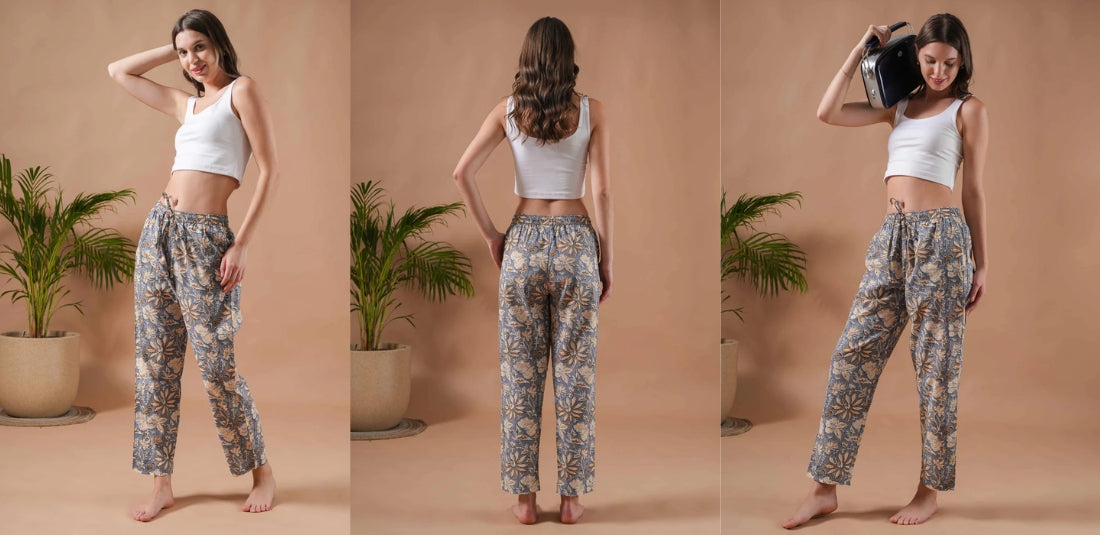
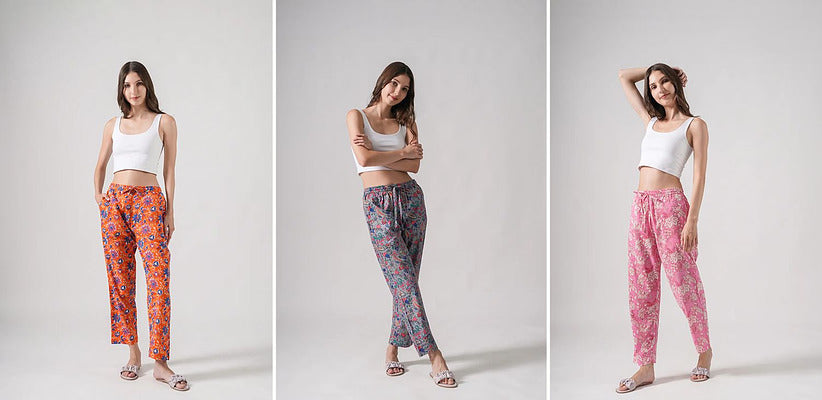
If you land on cotton pajama pants, that's what we make: 100% woven cotton, deep pockets, elastic waist with an adjustable drawstring, in tall and plus fits, from $30. Sewn in small batches with artisan partners, shipped same-day from North Carolina, and backed by 500+ five-star reviews.
Frequently Asked Questions
What are the main types of nightwear for women?
The four core categories are pajama pants, pajama shorts, nightgowns or sleep shirts, and lounge sets. Pajama pants are the most versatile year-round option; shorts suit hot sleepers; nightgowns suit anyone who dislikes fabric between the legs; lounge sets work for people who need sleepwear that doubles as daywear.
What is the best fabric for nightwear?
For most people, 100% cotton it breathes, absorbs moisture, and works across seasons. Woven cotton breathes better than knit cotton jersey. Silk is excellent but expensive and high-maintenance. Avoid polyester if you sleep warm.
What should hot sleepers wear to bed?
Lightweight woven cotton in either shorts or a loose pant. Prioritize the weave and the fiber over the cut a loose polyester pant will still trap heat, while a fitted cotton one won't.
Are cotton pajamas warm enough for winter?
Yes, in a heated room. Cotton insulates by trapping air in the weave, so a woven cotton pant with a long-sleeve top handles most winters. For genuinely cold rooms, brushed cotton flannel adds warmth without giving up breathability.
What's the difference between pajama pants and lounge pants?
Mainly the weave and how they read in public. Pajama pants are typically softer and made for sleep. Cotton poplin lounge pants use a crisper plain weave that holds its shape, so they look intentional outside the bedroom while staying comfortable enough to sleep in.
How do I find pajama pants that are long enough?
Look for a tall fit rather than sizing up a larger size adds width, not length. Check the published inseam measurement rather than relying on the size label.